

2008 was a banner year for the Ultimate Fighting Championship. Their expansion and dominance over the world of mixed martial arts had never been more prevalent, as their biggest mainstream competitors – PRIDE FC and Elite XC – had been run out of commission in the past two years. To cap it all off, the company promised a groundbreaking UFC video game for release in early 2009 that would further push the sport into the mainstream. However, this expansion led to turmoil within the UFC.
While the gameplay development went relatively smoothly, the organization ran into some major concerns with fighter likenesses and usage rights. Some of these issues were minor – Clay Guida could not be included because animating his hair caused problems with the game’s physics formulas – but there was one major problem. The UFC was asking for its contracted fighters to sign contracts allowing the company lifetime usage of their image for promotional purposes. While many fighters, including UFC lifers Chuck Liddell and Georges St. Pierre, acquiesced with little conflict, welterweight contender Jon Fitch did not.

Clay Guida’s hair, completely unprogramable.
Fitch, coming off a UFC 87 loss to champion St. Pierre, was upset with the contract and refused to sign. Why? “Because it asked me for a lifetime contract for the video games, so they would have exclusive rights to use our likeness for these video games and we couldn't go and do any other video games ever again in our lifetime." Those are Fitch’s words, which seem reasonable enough, especially when he also claims that the contract wouldn’t have paid the fighters for the use of their likenesses. The UFC was in a bind – it had promised all of its fighters to game publisher THQ, and now stood to face some embarrassment, but this was something that could be worked out with a little more communication, right?

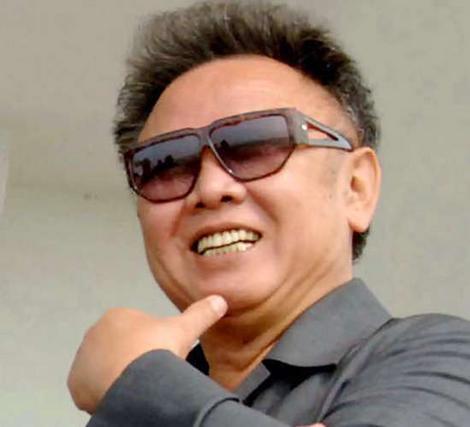
Quit smiling, jackass, Dana says you're fired.
Less than 24 hours later, things were resolved. Fitch and his AKA teammates were back on the roster after a talk with UFC co-owner Lorenzo Fertitta, and they signed the video game agreement, apparently without any changes to the contract’s language. Just like that, things were back in order, and the Ultimate Fighting juggernaut rolled on. But what would have happened if the AKA remained exiled from the UFC?

More skulls! I want so many skulls that Ed Hardy craps himself when he sees this shirt!
Now, all of the sudden, Strikeforce has one of the best welterweight lineups in MMA, with Fitch, Swick, and Koscheck battling for the belt with Jake Shields (assuming he’d stay at welterweight), Nick Diaz, and Jay Hieron. The added attention to the 170 pound division may also have put pressure on the company to pick up Paul Daley’s option from Affliction rather than let him jump to the UFC. The top 5 welterweights in either promotion would look like this:
UFC (BE Rank) Strikeforce (BE Rank)
- Georges St. Pierre (1) Jake Shields (6)
- Thiago Alves (3) Jon Fitch (2)
- Matt Hughes (4t) Josh Koscheck (4t)
- Carlos Condit (8) Mike Swick (7)
- Dan Hardy/Paulo Thiago (12/10) Paul Daley/Nick Diaz (9/18)
The only other notable fighter that would have been dropped in the equation is quickly rising heavyweight Cain Velasquez. Velasquez is the kind of fighter that Strikeforce loves – a young, hard fighting prospect from California that can rise to prominence, and then become too expensive to resign. However, given the company’s recent acquisition of Fedor Emelianenko they’ve shown a willingness to spend money on heavyweight talent. That would reshape the heavyweight division to look like this:
UFC (BE Rank) Strikeforce (BE Rank)
- Brock Lesnar (2) Fedor Emelianenko (1)
- Minotauro Nogueira (3) Brett Rogers (8)
- Frank Mir (4) Andrei Arlovski (10)
- Shane Carwin (7) Cain Velasquez (11)
- Couture/Dos Santos (12/10) Overeem/Werdum (12/13)

We need you to fight every time one of our divisions craps out. Think you can be a distraction?
All in all, if the UFC dropped AKA, it could have been a costly move. While Strikeforce has emerged as a legitimate threat in the past year, the ability to sign guys like Fitch, Koscheck, Swick, and Velasquez, would have been a coup for them, and given the company some notable headliners – which would have helped them sell tickets at the gate and possibly develop their network deal with CBS even faster. Though some might say that Strikeforce couldn’t afford these fighters, the deal with Fedor completed after the collapse of Affliction shows otherwise. The company is showing new signs of life, which was necessary to fill the void left by countless competitors in attempting to become an elite fighting promotion in the United States.
So the UFC made the right decision in bringing these fighters back. White’s strongarm technique worked, getting his guys to sign their contracts without seemingly losing anything on his end but a little goodwill. And if there’s one thing Dana’s public battles with fighters like Tito Ortiz and Randy Couture have shown, goodwill is only a minor negotiating ploy in the world of mixed martial arts.
So the UFC made the right decision in bringing these fighters back. White’s strongarm technique worked, getting his guys to sign their contracts without seemingly losing anything on his end but a little goodwill. And if there’s one thing Dana’s public battles with fighters like Tito Ortiz and Randy Couture have shown, goodwill is only a minor negotiating ploy in the world of mixed martial arts.




 1/5
1/5


